


 Joe D'Aurias Auto Service
AUTONET TV
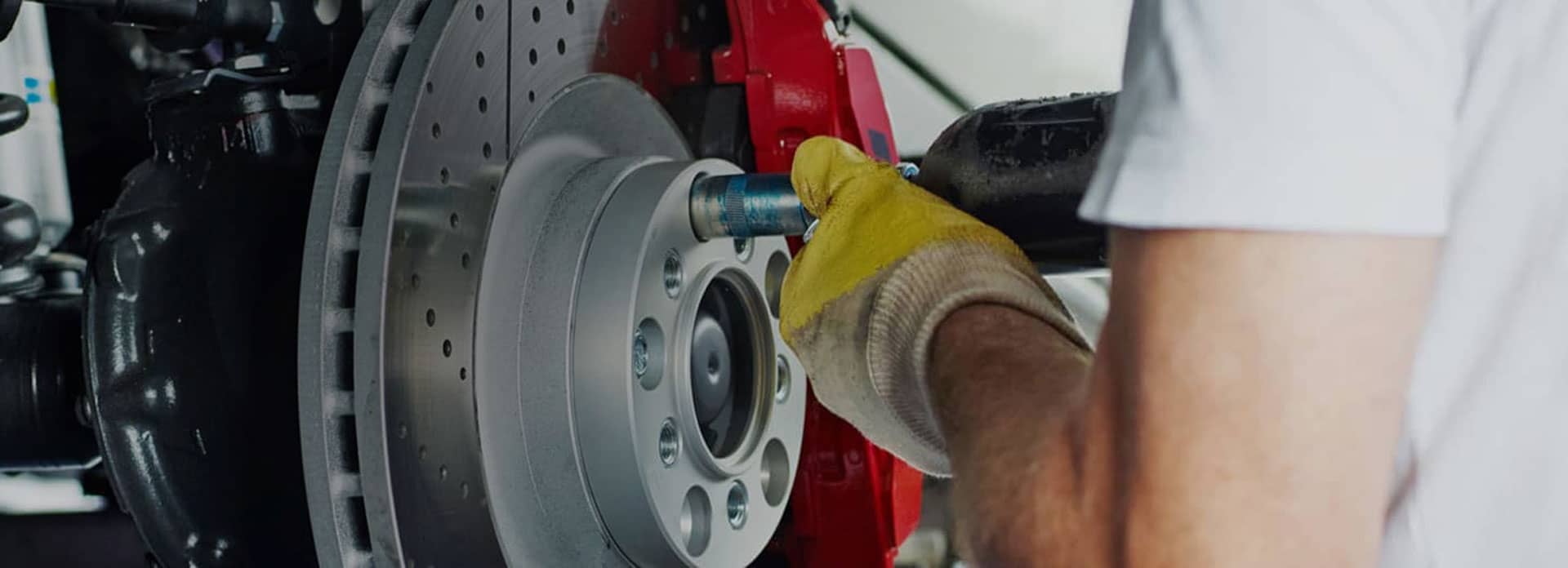
Archive for November 2025Going (Lug) Nuts (Lug Nut Replacement)Posted November 30, 2025 1:31 PMHere's a part of your vehicle you probably don't think about much: lug nuts. They're what fasten your wheels onto your axles. Pretty important, right? In order to take the wheels off your vehicle to service the brakes, rotate the tires, etc., the lug nuts have to be in good shape so a wrench will grip them tightly. Because lug nuts are on your wheels, they are exposed to all the elements of the road (salt, water, grime) and really take a beating. Unfortunately, some manufacturers have made them out of two different metals. Underneath is the working part of the lug nut, made of steel. On top is the decorative (the "good looking") part, made out of chrome, stainless steel or aluminum. After a while, the steel part begins to corrode and expands. That changes the shape of the outer cap, sometimes rounding off the hexagonal edges and making it hard (if not impossible) to either loosen or tighten the lug nuts since the wrench won't fit any more. The reason that's so important is those lug nuts must be functional, especially if you find you have a flat tire somewhere on the road. If the wheel can't come off to be swapped with a spare, it leaves few options, one of which is your vehicle may have to be towed. All that for corroded lug nuts! When you take your vehicle in for service, the technician who works on it keeps an eye on many things, especially if he or she is removing wheels. It's not unusual for your service advisor to recommend you replace several lug nuts at once since some corrode at a different rate than others. Your repair facility is trying to help you avoid driving a vehicle that has wheels that can't easily be taken off when they need to be. The good news is there are one-piece lug nuts that don't have the problem the two-piece lug nuts have, so replacing them could eliminate that from happening again any time soon. And that's not "nuts" at all. Joe D'Auria's Auto In That Case… (Transfer Case Exchange)Posted November 23, 2025 1:37 PMEver wonder how all-wheel-drive or 4-wheel-drive vehicles get the power from the engine to the front and rear wheels? The magic happens in what's called a transfer case. In some all-wheel-drive vehicles, it's sometime called a power take-off unit, or PTU. Inside the transfer case is a set of gears. And to keep those gears meshing smoothly, they have to be lubricated and kept cool. What does that is called transfer case fluid. Depending on your vehicle's type of transfer case, it is filled with either an automatic transmission fluid, a gear oil that's a bit thicker or transfer case fluid designed to be use for your transfer case. As happens with all lubricating fluids, the transfer case fluid has things in it that break down the older they get. They have corrosion inhibitors, detergents and anti-foaming agents that keep the lubricant from getting air bubbles in it. Transfer cases don't have filters in them to clean out impurities. If you don't have your transfer case fluid exchanged for fresh, you risk damage to the case, and that can run into thousands of dollars. So the wise driver makes sure the fluid is changed according to the manufacturer's recommendations. For many vehicles, that is every 30,000 mi/50,000 km, but some require it more frequently. Your vehicle service facility can advise you on what your vehicle's optimal interval is. During the fluid exchange, any metal filings that may have come off are cleaned off of the drain and fill plugs that are usually magnetized to catch the stray metal pieces. If you hear grinding noises coming from under your vehicle or if it is having trouble shifting gears or going in and out of 4-wheel-drive, those could be signs your transfer case needs service. In that case, have our technicians check it out. The best plan of action? Keep your transfer case fluid maintained and it should keep you heading down the road for years to come. Joe D'Auria's Auto Always on Guard (TMPS)Posted November 16, 2025 1:23 PMOne of the most important things you can do to keep your vehicle running safely is to make sure your tires are properly inflated. If one or more is vastly over- or underinflated, that has the potential to cause major handling problems and may result in a dangerous accident. All vehicles in recent years are equipped with Tire Pressure Monitoring Systems, or TPMS. One system uses small sensors in the tires that continually check the pressure in each tire. That sensor sends a signal to computers in your vehicle which turns on an instrument panel light warning of low pressure when at least one is very low. Or it may update a numeric reading on your instrument panel which gives you an approximation of how many PSI (pounds per square inch) of air is in each tire. Another system works with your antilock brake system to measure the size of your vehicle’s tires. When one wheel is going faster than another, it will spin faster. A computer sees that and alerts you that tire’s diameter is smaller than the others and therefore must be underinflated. No matter what system you have, it’s also helpful for you to know how much pressure each tire is supposed to be inflated to. You can find that on a label on the driver’s side door sill. In addition, the TPMS system should not be used as a substitute for checking your tires with a tire gauge since the TPMS accuracy usually isn’t quite as precise. Keep in mind that tire sensors can fail, so each system acts as a backup for the other. Since many vehicles these days don’t have spare tires, it’s good to know that your TPMS can warn you if you have a leak in one of your tires. If you get a low-pressure warning, many systems will tell you which tire is low, so you can do your own visual check. Often you can see if you’ve picked up a nail or a screw if it’s sticking out of the tread or near the sidewall. Being able to receive an early warning from your vehicle of abnormal tire pressure may give you a chance to safely drive to a service center before your tire slowly goes completely flat (which can ruin the tire and badly damage the rim). It also may ultimately prevent you from being stranded somewhere with a flat tire or, most importantly, having a sudden blowout on the road. Joe D'Auria's Auto Taking the Heat (Batteries in Hot Weather)Posted November 9, 2025 1:22 PMQuick question. Which is tougher on a vehicle's battery, the heat or the cold? Believe it or not, it's the heat. Think about it. The battery often sits in the engine compartment next to that motor generating lots of heat. That can accelerate corrosion in the battery and may even cause water in it to evaporate. That will weaken the cranking power of your battery and shorten its life span. To take care of your battery, here are a few suggestions. It's a good idea to have it checked out to see what shape it's in. At your vehicle service facility, they have diagnostic equipment that can evaluate its condition. That can help you know how long you can expect it to last before having to replace it. At the same time, you should have your charging system evaluated. If your battery is not getting charged properly, it can be in great shape but not very useful when it comes to starting your vehicle. A technician will also check the cable connections that should be free of corrosion and tight. Keep in mind that under certain conditions, a vehicle battery can cause an explosion if close to an electrical spark. This is why the safe way to go is to have a qualified, trained technician do the work. Your battery is important both in hot and cold weather. When it comes to starting your vehicle, make sure it's always up to the job. Joe D'Auria's Auto Beginning to See the Light (Check Engine Light Diagnostics)Posted November 2, 2025 1:25 PMIt's a light many drivers fear they'll see turn on at the most inopportune time. It's the one on the dash that says "Check Engine," "Service Engine Soon," or it may be simply an engine-shaped light. Your first instinct may be to pull off to the side of the road and turn off the engine. The truth is that Check Engine light can be pointing to problems as simple as a loose gas cap. But it could be as serious as a severely misfiring engine. Don't ignore it because it's there to help you avoid an expensive repair it is designed to alert you to, to tell you something's not quite right. Your vehicle has a connected system of computers and sensors constantly checking to see that all systems are working the way they should. If something isn't, the system will turn on the Check Engine light. If it's flashing, that could be serious. Look at some of the other warning lights or gauges such as heat or oil pressure. They could be telling you your vehicle's problem should be checked right away. In that case, if you can, safely pull off the road and shut the vehicle down. If your vehicle loses power and the Check Engine light is on, try not to push the demands you are making on the engine, such as towing or accelerating hard. Simply put, a flashing Check Engine light should be checked out by a professional as soon as possible. If the Check Engine light is on steadily, manufacturers say it means there's a problem, but it probably doesn't require immediate service. The system is designed to remember the problem it found and store it (as a code) so it can be retrieved later. When you do bring your vehicle in to have us see what's behind the Check Engine light coming on, we’ll hook your vehicle up to a diagnostics tool that can reveal the clues the engine's computers have stored. It takes a trained technician to understand those clues, like a doctor who can interpret a patient's symptoms and come up with the correct diagnosis. Some newer vehicles can even be checked remotely. Once we figure out the problem and repair it, you'll be back on the road again. It's nice to know the Check Engine light is your sentry, standing by to alert you the next time you begin to "see the light." Joe D'Auria's Auto | ||
SearchArchiveApril 2018 (18)May 2018 (4) June 2018 (4) July 2018 (5) August 2018 (4) September 2018 (5) October 2018 (4) November 2018 (4) December 2018 (5) January 2019 (5) February 2019 (4) March 2019 (5) April 2019 (4) May 2019 (4) June 2019 (5) July 2019 (4) August 2019 (4) September 2019 (5) October 2019 (4) November 2019 (4) December 2019 (5) January 2020 (4) February 2020 (4) March 2020 (5) April 2020 (4) May 2020 (5) June 2020 (4) July 2020 (4) August 2020 (5) September 2020 (4) October 2020 (4) November 2020 (5) December 2020 (4) January 2021 (6) February 2021 (4) March 2021 (4) April 2021 (4) May 2021 (5) June 2021 (4) July 2021 (4) August 2021 (5) September 2021 (4) October 2021 (5) November 2021 (4) December 2021 (4) January 2022 (6) February 2022 (4) March 2022 (4) April 2022 (4) May 2022 (5) June 2022 (4) July 2022 (5) August 2022 (4) September 2022 (4) October 2022 (5) November 2022 (4) December 2022 (4) January 2023 (5) February 2023 (4) March 2023 (4) April 2023 (5) May 2023 (4) June 2023 (4) July 2023 (5) August 2023 (4) September 2023 (4) October 2023 (5) November 2023 (4) December 2023 (5) January 2024 (5) February 2024 (4) March 2024 (5) April 2024 (4) May 2024 (4) June 2024 (5) July 2024 (4) August 2024 (4) September 2024 (4) October 2024 (4) November 2024 (4) December 2024 (5) January 2025 (4) February 2025 (4) March 2025 (5) April 2025 (4) May 2025 (4) June 2025 (5) July 2025 (4) August 2025 (5) September 2025 (4) October 2025 (4) November 2025 (5) December 2025 (4) January 2026 (4) February 2026 (4) March 2026 (5) April 2026 (4) May 2026 (5) June 2026 (4) July 2026 (4) August 2026 (5) | CategoriesMaintenance and Repair (249) (195) | |

OUR REVIEWS

 Cherry Hill, NJ
Elam Afla, 08/24/2026Honest, fair pricing and quality work. I trust my entire family’s cars to Chris and his team.

Get free Coupons
Take advantage of these great offers!
Discounts on a set of Shocks and Struts when you purchase a set of 4
Call for Details
Rebates on select tires with a purchase of 4 new tires
Call for Details
partners